Discover Historic Williamstown! Week 2

Historic Site 2. The Haystack Monument

You’ll have to delve into the depths of the Williams College campus to find our next historical marker which stands at the (supposed) site of the very haystack beneath which Williams students Samuel J. Mills, James Richards, Francis L. Robbins, Harvey Loomis, and Byram Green sheltered during a thunderstorm in 1806.

If you can find this marker and historic site, take a photo of it, or of you standing next to it, and send it along to info@williamstownhistoricalmuseum.org.

Haystacks looked quite different in 1806 than they do today. We are used to seeing rolled bales of hay wrapped in Tyvek, but the image above is an example of the type of  haystack the five Williams students probably sheltered under or, more accurately, within.

The distinctive “beehive” shape is also represented on the Haystack Monument.

“The field is the world” (Matthew 13:38) reads the inscription beneath the globe atop the Haystack Monument. From that meeting under a haystack in 1806, came the impetus for the formation, in 1810, of the American Board of Commissioners for Foreign Missions (ABCFM). By the mid-19th century over four dozen Williams graduates were serving as missionaries in the American West, the Middle East, Africa, India and Hawai’i.

Whatever your feelings are about the missionary movement, there is no question that what happened at the site of this historical marker changed the world.

You can learn more at the Williams College Chaplains’ Office webpage.  The video and an article by Douglas Showalter’s can be found here:  Into All the World:  the Story of the Haystack.

This week’s historical marker is located on the land known as Mission Park – seen in the map and aerial view above.

“The bonds of secrecy were so strong among these students that for many years after the Haystack Prayer Meeting its date, its exact location, and even the names of all the participants were not known. Fortunately, in 1854, Byram Green, the last surviving participant, put a cedar stake in the ground where the haystack had been…”
– The Rev. Dr. Douglas K. Showalter

That land, known as Sloan’s Meadow, was purchased by the Williams Society of Alumni and renamed it Mission Park.

In 1857, after the 1856 Haystack Jubilee (50th anniversary) celebration, the Mission Park Association was incorporated with its members holding the property “for the purpose of . . . erecting and placing thereon suitable monuments, and other memorials to commemorate the origin and progress of American missions . . .”

The Society of Alumni donated Mission Park to the College in 1885.

Paid for by Harvey Rice (Williams Class of 1824), the Haystack Monument was dedicated in July 1867. Although Rice originally planned a life-size haystack made of sandstone, a monument was decided upon. Made of ‘silver blue’ marble, it was erected by the Berkshire Marble Company of Alford, MA. Several of the trees around the monument were brought by groups from around the world, contributing species not commonly found in Williamstown to the arboretum of Williams College. We hope you will photograph the monument and surrounding trees so we may add them to our collection for posterity.

You can find a PDF of the 1867 “Proceedings at the Dedication of the Missionary Monument in Mission Park” here:  https://tinyurl.com/ybt65wcy

WCMA’s 2018 exhibit, “‘The Field is the World:’ Williams, Hawai’i, and Material Histories in the Making” looked at the legacy of the Missionary Movement. More about the exhibit can be found here:  “‘The Field is the World:’ Williams, Hawai’i, and Material Histories in the Making.”

Good luck in your search and we hope you will photograph the monument, marker, and surrounding trees so we may add them to our collection for posterity.  Thank you!

Discover Historic Williamstown Week 1!

Discover Historic Williamstown!
We hope you are holding up well and remaining healthy.  While we are still encouraged to maintain our “social distancing” status, we encourage you to explore historic Williamstown! Throughout town, nine historic sites are marked with plaques, describing their significance.  Eight of the plaques were installed by the Williamstown Bicentennial Committee in commemoration of the 200th anniversary of the town’s settlement, in 1953, and one was installed by a town resident.

We are currently running a series on our FaceBook page about the town’s historic sites, but we understand that not all of our members and friends use FaceBook, and we want everyone to take part in a “scavenger hunt” for our historic site markers.  Each week we will post information about the marker at one of the town’s historic sites. If you wish to drive to find the markers, there is parking near each one, but getting out on foot, if possible, may be a great way to enjoy the spring and capture history at the same time.  We encourage you to photograph the historic sites and email us the photo so that we may add it to our collection of current images of the historic sites in town.  Please take care and have fun!
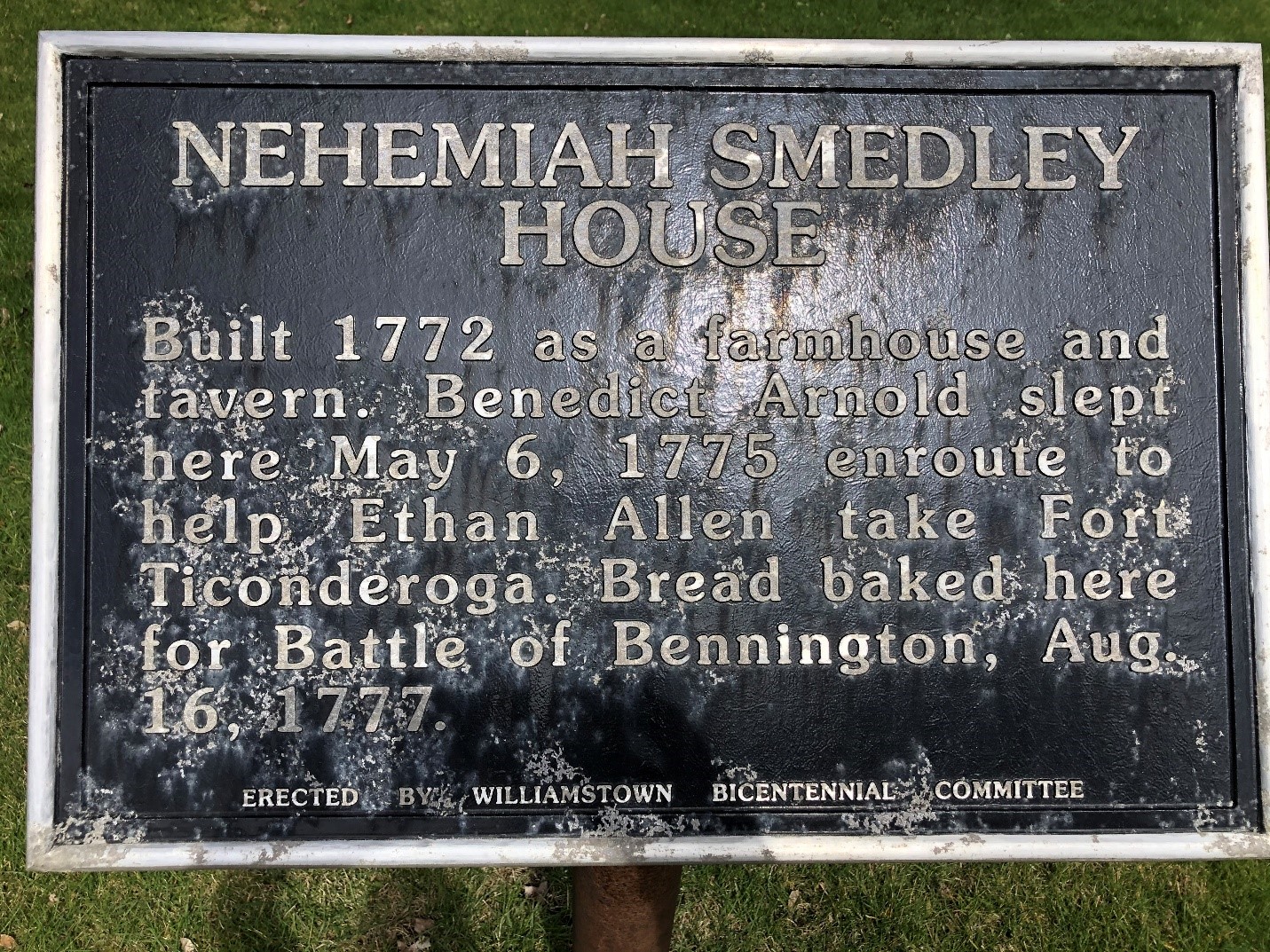
Benedict Arnold slept where?!?

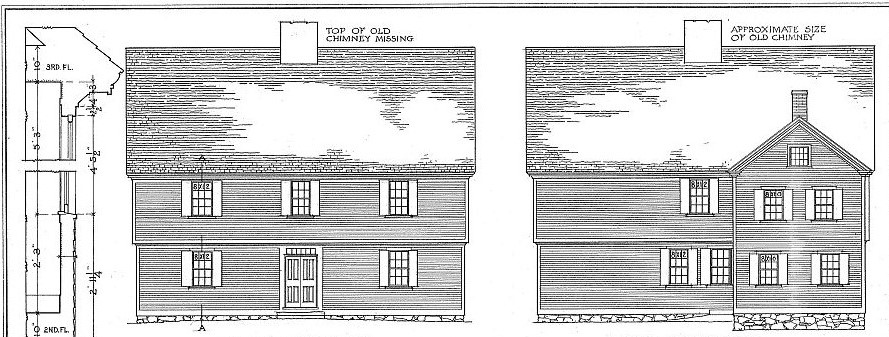
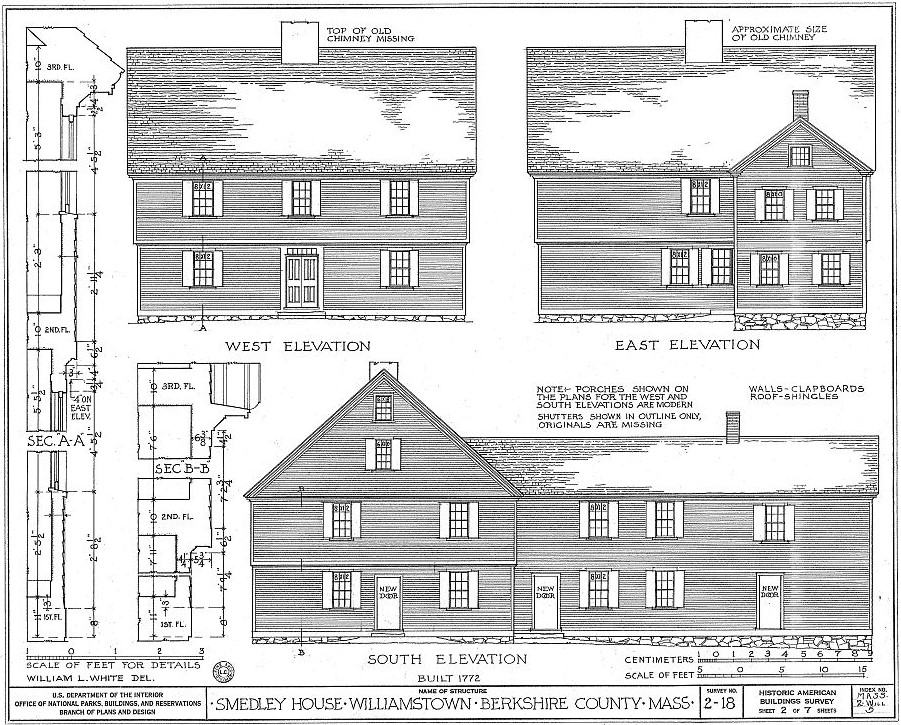
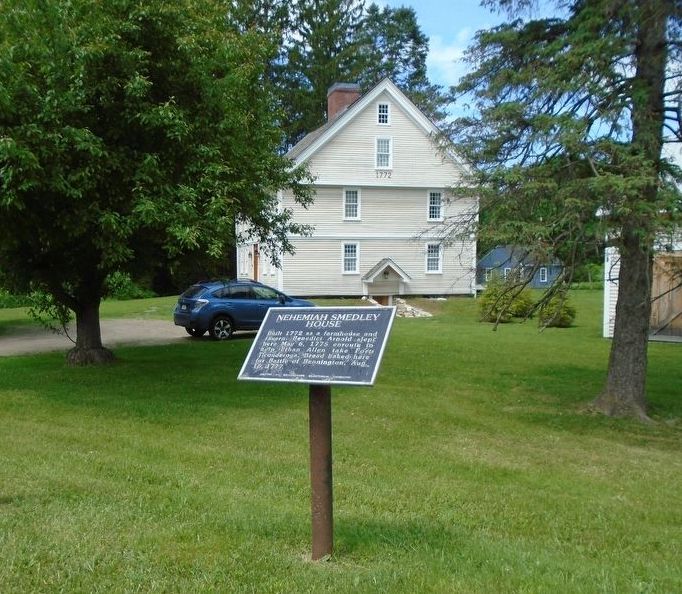
Right here in Williamstown at the Nehemiah Smedley House, but where is that?

On May 6, 1775 West Hoosuck (the town was not yet Williamstown) tavern owner Nehemiah Smedley contracted with Benedict Arnold (then a revolutionary war hero, not a traitor) to produce or procure enough biscuits, salted pork, and rum to supply a contingent of men for a few weeks. According to the contract, which still exists, Arnold paid Smedley five pounds for the goods.

Can you locate the former home of Nehemiah Smedley’s tavern and its historical marker?

Captain Nehemiah Smedley was one of the seven sons of Captain Samuel Smedley III and Esther Kilbourne. He was born in Litchfield, CT, in 1732 and died in Williamstown in 1789. One of the notable early residents of our town, he served as a military and civic leader, built a handsome house, owned a fine farm, and ran a tavern.

In 1754 Nehemiah Smedley planted the first orchard in Williamstown, but not at the site of the Smedley house that is still standing. His first property was at intersection of South Street and Field Park, where the Williams College Center for Development Economics (former Delta Psi fraternity, also known as St. Anthony Hall) now sits.

A few facts about Nehemiah Smedley:
1. At 35 years old he was the youngest member of the Building and Seating Committee for the first meetinghouse (First Congregational Church) in 1768, but he never joined the church
2. No portrait or other likeness of this “founding father” of Williamstown is known to exist
3. No headstone was erected over his grave and even the place of his burial within the limits of the graveyard is unknown.

Are you interested in learning more about Nehemiah Smedley?  You can watch a WilliNet video of a WHM sponsored lecture, presented in April 2014, by Louise Dudley and Judith Wilson, descendants of Smedley.  Here is a link to the video: Smedley Family Video.   In 2015, Bruce McDonald, the owner of the home, carried out extensive work on the house and presented a program on the history of the house and its restoration.  You can watch the video here: Smedley House Video Enjoy!

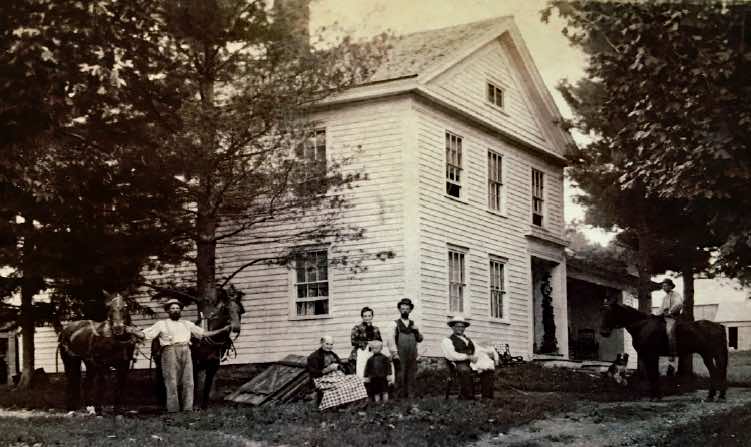
How many of you found the historical marker by his home/tavern on Main Street? The privately owned house has recently been beautifully restored and is a real gem of Williamstown architecture. Take a peek next time you are driving or walking past.  If you do, we hope you will photograph it and, and send the image to info@williamstownhistoricalmuseum.org.
The Thirteen Galusha Farms: 1798-2020

The Thirteen Galusha Farms Video

Most everybody knows about the Galusha Farm out on Green River Rd., but did you know that there have been thirteen different Galusha Farms in Williamstown since the first one was established in 1798 by the first of many Daniel Galushas?  The Williamstown Historical Museum presented a free talk on The Thirteen Galusha Farms with Dusty Griffin on Saturday, February 22 at 11 am in the Community Hall of the First Congregational Church, 906 Main Street (Rt. 2) in Williamstown. The talk was illustrated with more than 50 slides.

In this public lecture, “Thirteen Galusha Farms: 1798-2020” illustrated with photographs, old maps, news clippings, and manuscript materials, Dustin Griffin told the story of that first Galusha farm, which remained in the Galusha family from 1798 until 1940, and the stories of the many other farms set up by descendants of the first Daniel Galusha. The talk also shed some light on the bigger story of the rise and fall of dairy farming in Williamstown. The lecture, free and open to the public, took on Saturday February 22, at 11 am, in the community hall of the First Congregational Church in Williamstown. Dusty Griffin has frequently lectured on topics in local history to local audiences. His most recent talks include “A History of the Hopper” (September 2019) and”A Layman’s History of Williamstown’s Trees” (January 2020). He is the author of Williamstown and Williams College: Explorations in Local History (U. Mass. Press, 2018).


ABOUT DUSTY GRIFFIN
Local historian, Dustin “Dusty” Griffin, Professor of English Emeritus at New York University, has been a Williamstown resident since 2003. A 1965 graduate of Williams College, he is the author of many books on English literature. Griffin is a former board member of the Williamstown Historical Museum, he curated exhibitions on “Williamstown in the Civil War” (2012) and on “Big Days in a Small Town” (2014). His recent talks for WHM audiences covered the writing career of Col. Prentice of Mt. Hope, and introduced his own book, Williamstown and Williams College: Explorations in Local History (University of Massachusetts Press, 2018).