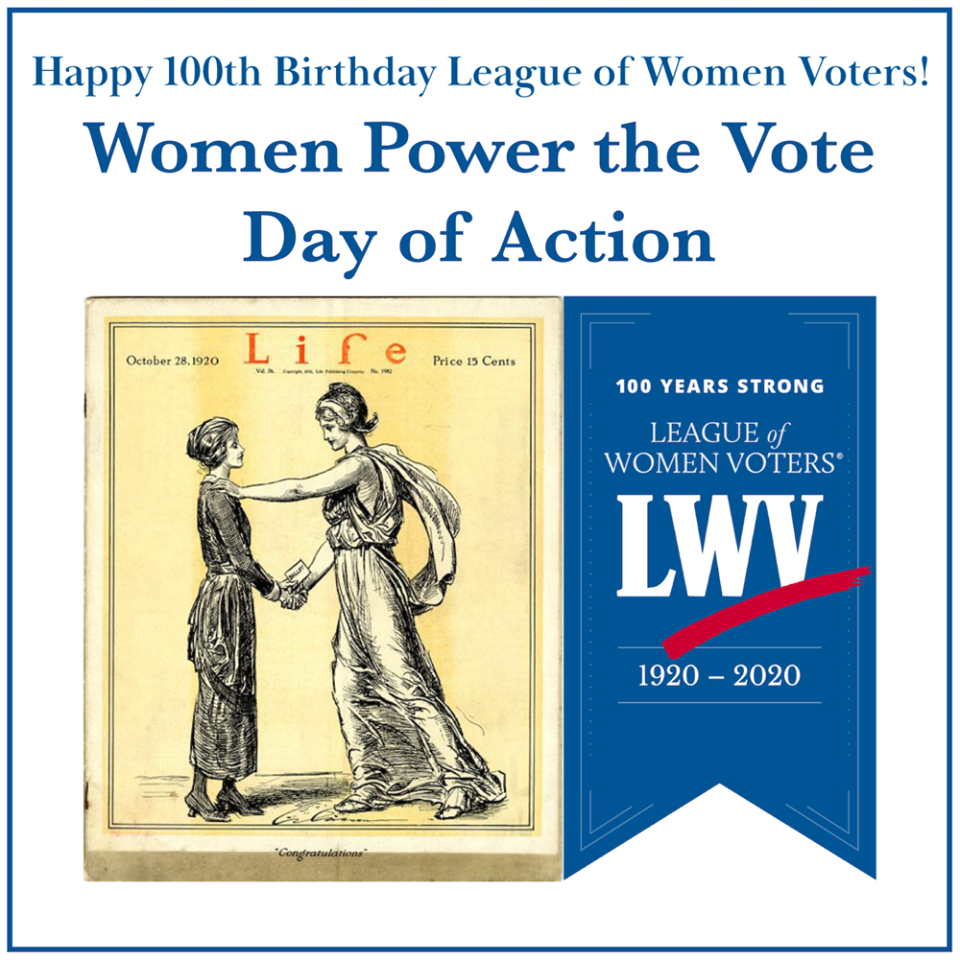
During our fourth week of our Summer of Woman Suffrage we will take a look at the League of Women Voters (LWV) both nationally and our very active local branch here in Williamstown. Thanks to historian @Barbara Winslow and Anne Skinner, current president of the Williamstown League, for their help and enthusiasm.
Learn more about the information shared here by reading Barbara Winslow’s article, “The League of Women Voters: A Century of Voter Engagement,” published by the The Gilder Lehrman Institute of American History
Read the full article: https://tinyurl.com/y2v6q9rb
Barbara Winslow is professor emerita of history at Brooklyn College. An authority on women’s activism, she is the founder and director emerita of The Shirley Chisholm Project. She is the author of Clio in the Classroom: A Guide for Teaching US Women’s History (Oxford University Press, 2009) and Shirley Chisholm: Catalyst for Change (Westview Press, 2013). With Julie A. Gallagher, she is the co-editor of Reshaping Women’s History: Voices of Nontraditional Women Historians (University of Illinois Press, 2018).
Here Winslow provides us with an overview and an introduction to the League:
“The League of Women Voters was founded in 1920 by American suffragists, just months before the ratification of the Nineteenth Amendment gave women the constitutional right to vote after more than seventy years of struggle.
Over the past one hundred years the League, following in the progressive politics of its mother organization, the National American Woman Suffrage Association (NAWSA), has been an influential and powerful women’s coalition.
An activist, grassroots organization, the League believes that citizens should play a critical role in civic advocacy. Its founders believed that maintaining a nonpartisan stance would protect their fledgling organization from becoming mired in the party politics of the day. However, League members were encouraged to be political themselves by educating citizens about, and lobbying for, governmental and social reform legislation.
The League’s accomplishments, failures, challenges, and ups and downs reflect the trajectory of US reform politics, class and racial conflicts, and the ebb and flow of women’s and feminist movements.”
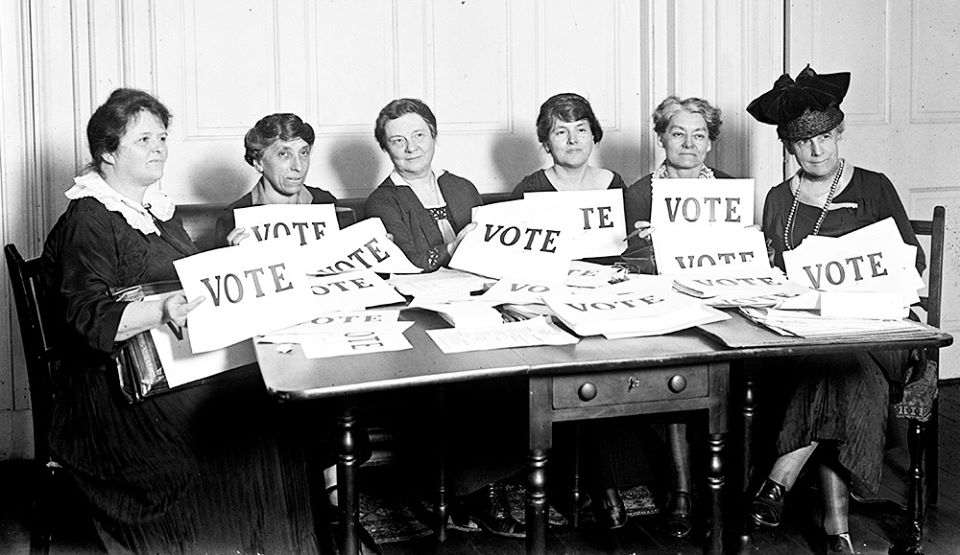
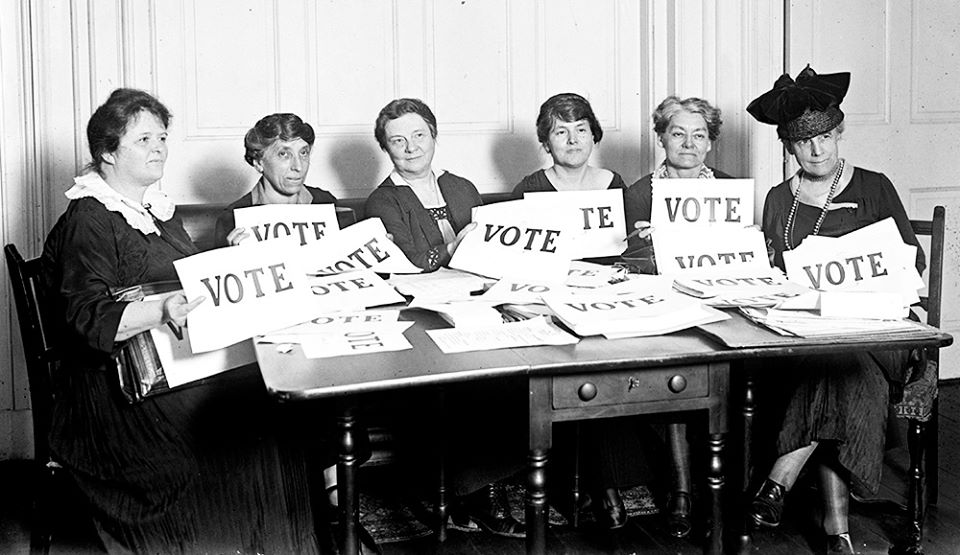 National League of Women Voters, September 17, 1924. (National Photo Company Collection, Library of Congress).
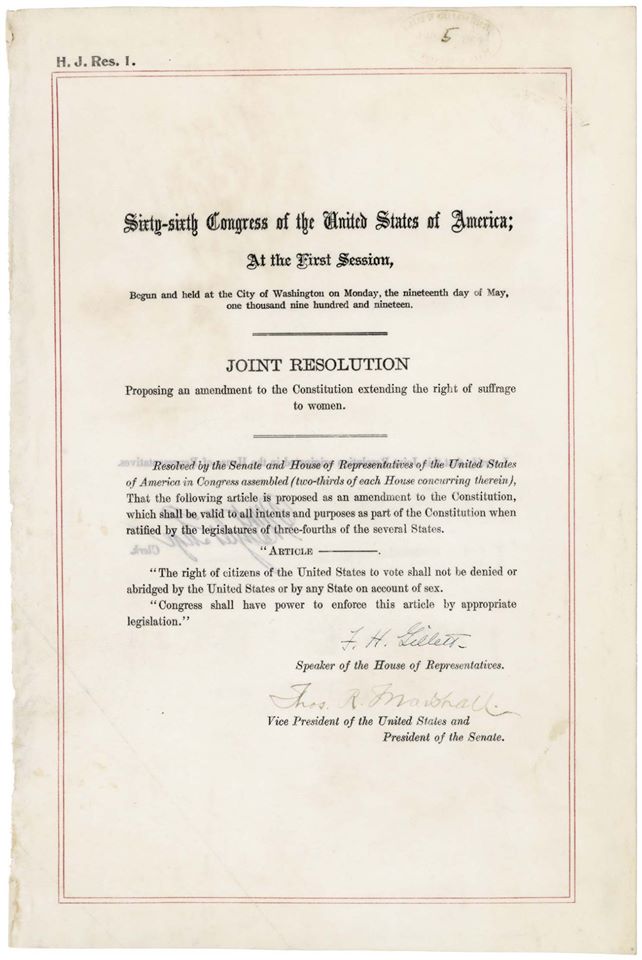 The 19th amendment.
The national League of Women Voters (LWV) was born with a sense of urgency, mission, and apprehensive optimism.
The genesis of the League was in the West. In 1909, at the NAWSA convention in Seattle, Washington, suffragist Emma Smith DeVoe (1848-1927) proposed a national league of women voters. The conference rejected the motion. After Washington State voted to enfranchise women, DeVoe organized the National Council of Women Voters, a nonpartisan coalition of women from voting states.
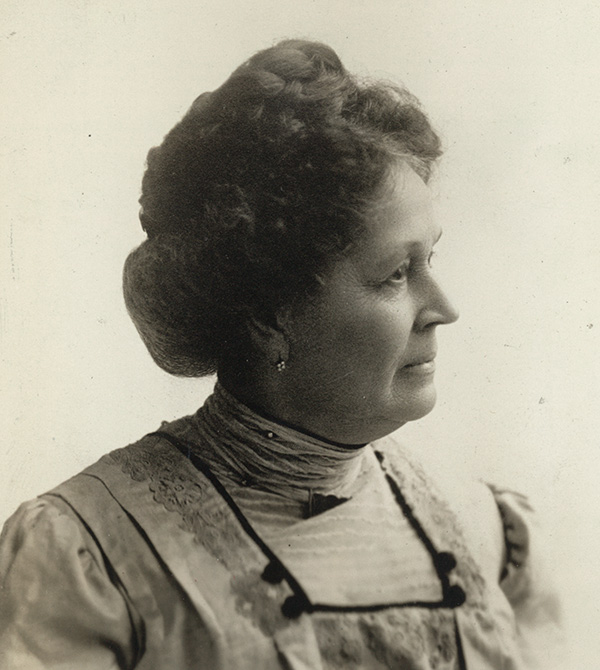 Emma Smith DeVoe by James & Bushnell, ca. 1915. (Prints and Photographs Division, Library of Congress).
Prior to the 1919 NAWSA convention in St Louis, the association’s president, Carrie Chapman Catt (1859-1947), began negotiating with DeVoe to merge her organization with a new league that would be the successor to NAWSA. As fifteen states had already ratified the Nineteenth Amendment, NAWSA wanted to move forward with a plan to educate women on the voting process and further their participation in the political arena.
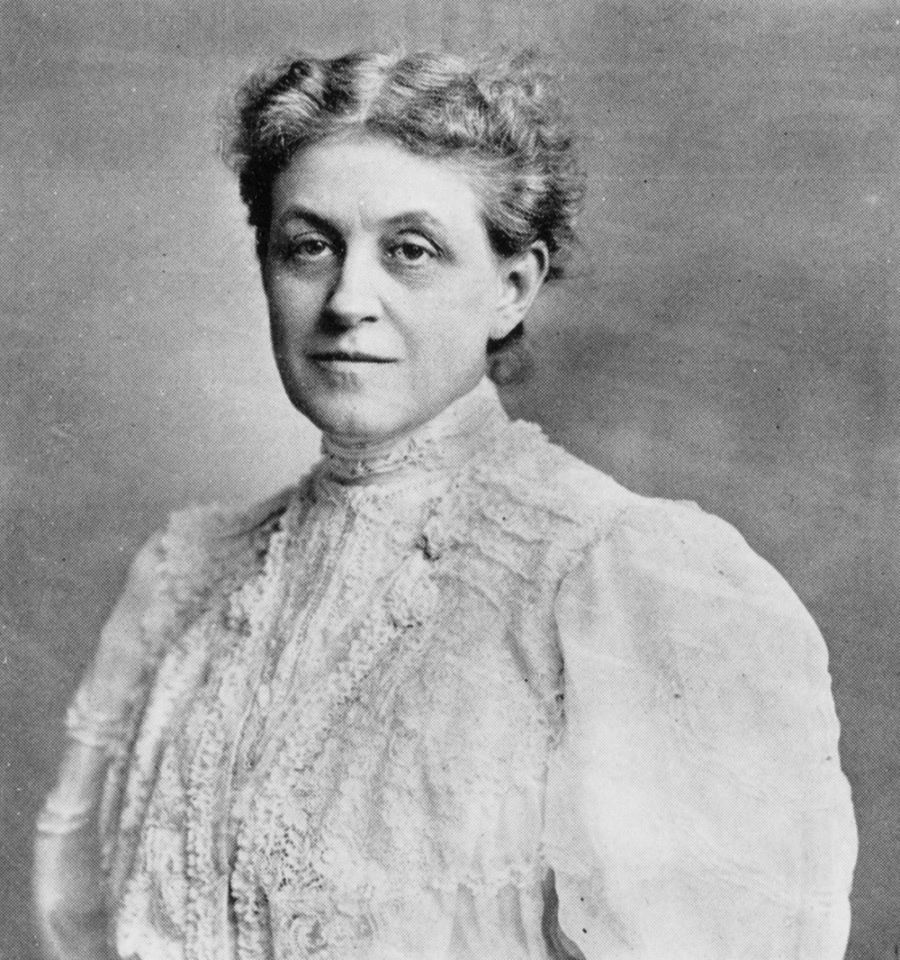 Carrie Chapman Catt, ca. 1908. (Carrie Chapman Catt Papers, Library of Congress)
The formal organization of LWV was drafted at the February 1920 National American Woman Suffrage Association (NAWSA) convention held in Chicago. For one year, the League was a committee of NAWSA before it became its own independent entity.
Not all NAWSA members supported the formation of the League. Some argued that since NAWSA’s goal of securing the vote was accomplished, NAWSA could be disbanded. Others were concerned that an independent organization of women might create dissension within and take women out of the existing political parties. Others were mindful of the growing conservative climate that was hostile to any form of radicalism, including feminism.
Catt promised that this new organization would be “a living memorial . . . dedicated to the memory of our brave departed leaders, to the sacrifices they made for our cause.” A League, she continued, was necessary so that women could “use their new freedom to make their nation safer for their children and their children’s children.”
From “The League of Women Voters: A Century of Voter Engagement.” by Barbara Winslow, published by The Gilder Lehrman Institute of American History
Read the full article: https://tinyurl.com/y2v6q9rb
“What should be done, can be done; what can be done, let us do.” – Carrie Chapman Catt
After the League of Women Voters (LWV) was formally organized in February 1920, Maud Wood Park was elected the first president. The League’s first major legislative victory was the passage of the Sheppard-Towner Act of 1921, which provided federal funds for maternity and child welfare.
 Portrait of the National League of Women Voters’ board of directors, including Maud Wood Park and Carrie Chapman Catt, taken during its Chicago Convention in 1920.
The League’s platform was ambitious and progressive, advocating, for example, support for the Cable Act supporting independent citizenship for married women, which became law in 1922, ensuring that a woman’s citizenship did not rely on the status of her husband’s citizenship.
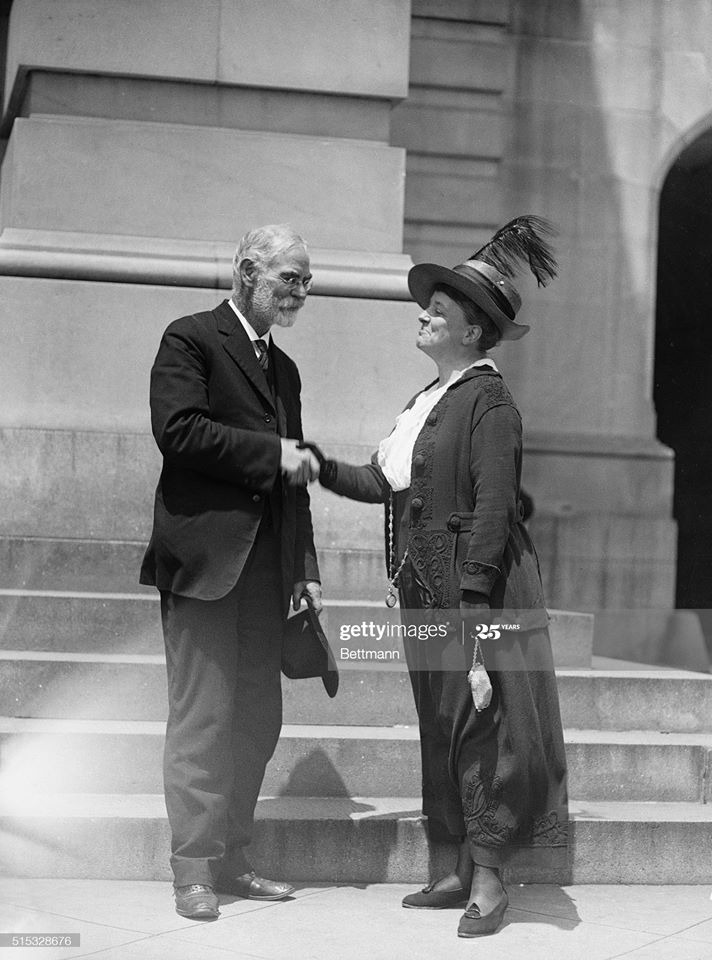 File Photo by Library of Congress Mrs. Maud Wood Park extending her thanks to Congressman James R. Mann, for his part in pushing the Woman’s Suffrage Constitutional Amendment through the House of Representatives.
The League also sponsored a “get out the vote” campaign and called for legislation supporting collective bargaining, child labor laws, a minimum wage, a state employment service, and compulsory public education.
By 1924 there were national branches in 346 of 433 congressional districts. One of the branches founded in 1924 was here in Williamstown.
The League of Women Voters continued its progressive legislative agenda throughout the decades. Its membership declined during the 1929−1940 Depression…But the League remained committed to progressive legislation, supporting most of the policies and proposals initiated by Franklin Roosevelt’s New Deal.
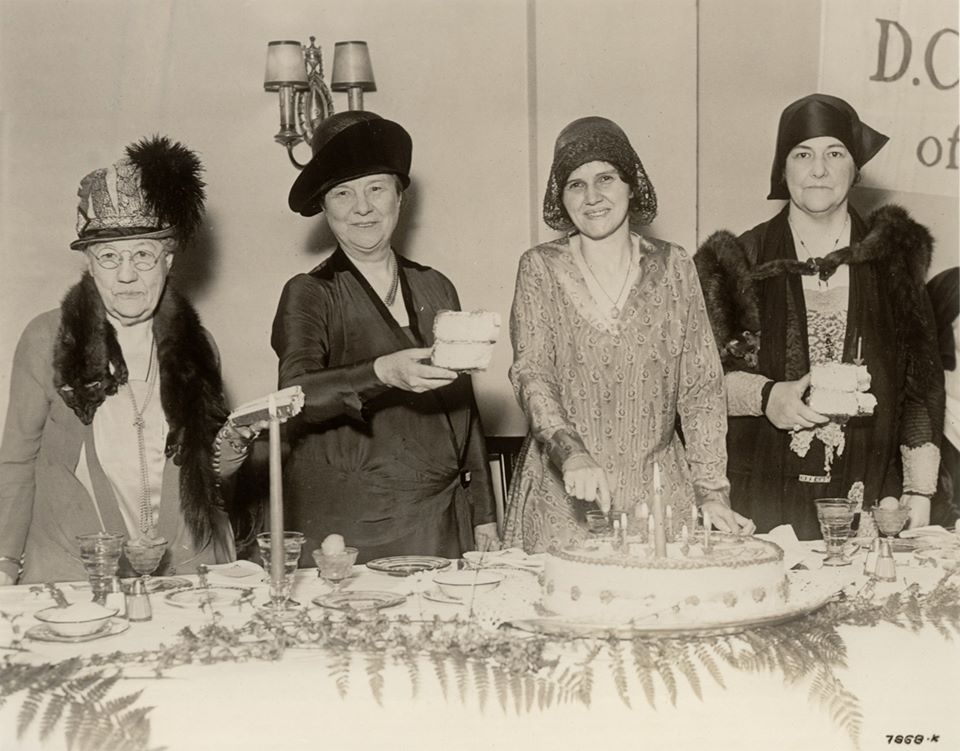 Celebrating the 10th anniversary of the LWV in 1930.
From its inception, the League was internationalist. Its founding members had been involved in a wide range of global suffrage, temperance, peace, and social welfare organizations. In the 1920s the LWV supported the League of Nations. In the 1930s it warned of the dangers of fascism, supported Roosevelt’s Lend Lease, the war aims of World War II, and, postwar, the United Nations. Harry Truman invited the League of Women Voters to serve as a consultant to the US delegation at the United Nations Charter Conference in 1945. To this day, the League maintains its presence at the United Nations through its one official and two alternate observers.
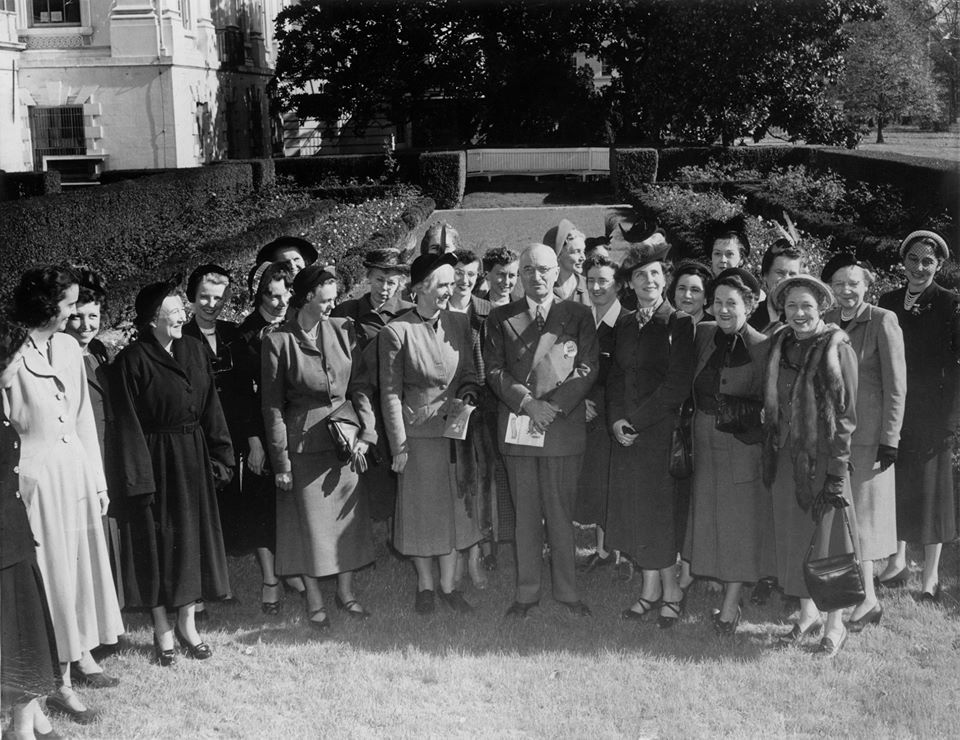 President Harry Truman invited the League to serve as a consultant to the U.S. delegation at the United Nations Charter Conference.
In the post–World War II era, the League of Women Voters began to make serious changes in its activities and policies. The civil rights, women’s, and social justice movements galvanized the League’s reassessment.
As early as the 1950s state chapters began to challenge restrictive voter registration laws. While much attention has been given to the racist voting laws in the southern states, northern states’ voter laws were also reprehensibly restrictive. In the 1950s the New York State League of Women Voters mounted a campaign called Permanent Personal Registration (PPR) to make voter registration easier. The New Yorker described this campaign as “the greatest political effort since the fight for woman’s suffrage.” As of 1960, in New York State one had to pass an English written and oral literacy test and provide proof of an eighth-grade education. The League fought against these racist and xenophobic restrictions.
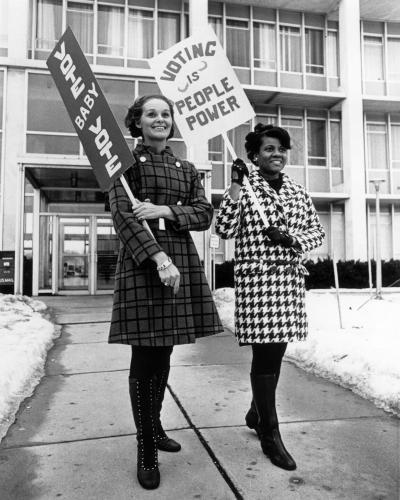
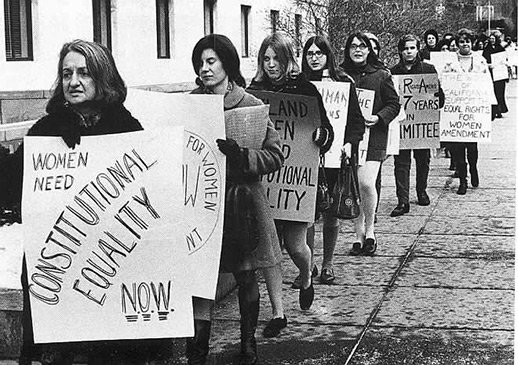
The postwar women’s movement changed the League’s membership and political direction. It had to compete for members and political influence with organizations such as the National Organization for Women (NOW). The League reversed its position on the ERA and, after 1974, became a major partner with NOW in championing the amendment.
The LWV sponsored the United States presidential debates in 1976, 1980, and 1984, but pulled out in 1988 after refusing to go along with the demands of the major candidates’ campaigns.

The League continues to provide voters with nonpartisan information about federal, state, and local candidates as well as information on the political issues of the day.
The League of Women Voters’ membership has tripled since 2016; it now has more than 500,000 members in approximately 700 state and local organizations. It is still overwhelmingly white and middle class, but more working women are members. Especially in urban areas, the League chapters make attempts at diversity.
While still nonpartisan, the League champions a very progressive agenda including support for reproductive rights, gun safety, abolition of the death penalty, universal health care, childcare, enforcement of the EPA, and legislation combating climate catastrophe; it opposes racial profiling and economic, racial, and gender inequality. The League is also committed to universal suffrage. It opposes voter suppression in any and all forms, Citizens United, and gerrymandering; it supports federal legislation guaranteeing every eligible voter the right to vote as well as voting rights for those incarcerated and for those out of prison.
While it is a very different organization today than the one founded in 1920, the twenty-first-century League of Women Voters has fulfilled much of its century-old mission.
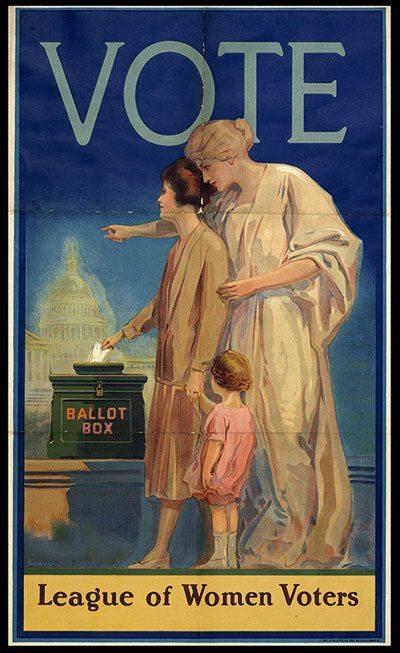 “Vote” LWV poster c 1920 by Louis Bonhajo.
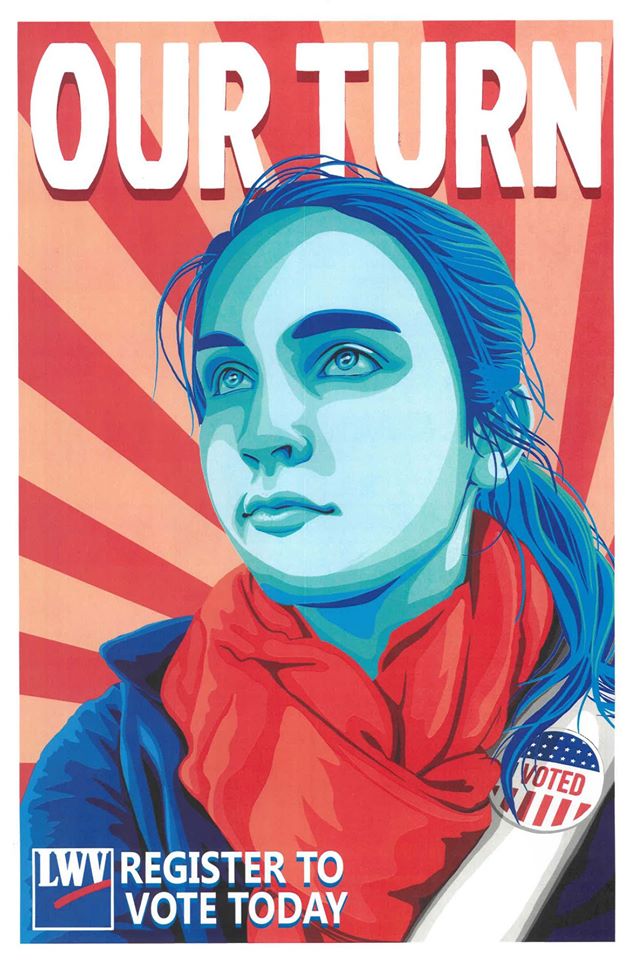 “Our Turn” LWV poster c 2018 by Laura Champion from Lafayette High School.
Learn more about the information shared here by reading Barbara Winslow’s article, “The League of Women Voters: A Century of Voter Engagement,” published by the The Gilder Lehrman Institute of American History
Read the full article: https://tinyurl.com/y2v6q9rb
Barbara Winslow is professor emerita of history at Brooklyn College. An authority on women’s activism, she is the founder and director emerita of The Shirley Chisholm Project. She is the author of Clio in the Classroom: A Guide for Teaching US Women’s History (Oxford University Press, 2009) and Shirley Chisholm: Catalyst for Change (Westview Press, 2013). With Julie A. Gallagher, she is the co-editor of Reshaping Women’s History: Voices of Nontraditional Women Historians (University of Illinois Press, 2018).
As a community, Williamstown was anti-Suffrage, but once the 19th amendment was ratified and the League of Women Voters was established in 1920, the women of the town were fairly quick to form a LWV branch. Founded in 1924, the Williamstown League is now one of the oldest in the state as earlier branches have gone by the wayside.
“We are a grassroots organization,” Anne Skinner, a long-time League member and its current President explained. “The programs that we support come from the opinions of the members of the league. You’re not just paying your dues, you pay your dues and then you think about the issues.”
Voter education is a high priority, and it is League members who hand out the “I Voted” stickers as you exit the polls, although they haven’t been able to this year. Skinner reminded all voters that the primary for state offices is on September 1st. “It’s very early this year, and the League is urging people to vote by mail.”
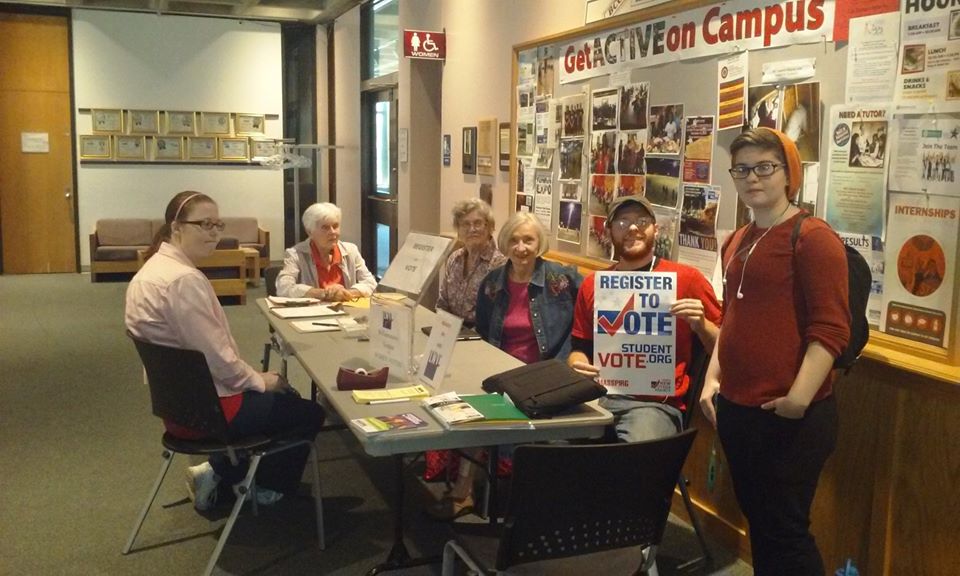 LWV members holding a Voter Registration Drive at BCC in 2015
The Williamstown League has proudly hosted candidate forums over the years to enable residents to get to know candidates on both sides of the aisle and the issues. “We’re very proud of our non-partisanship and we don’t endorse candidates or issues we haven’t studied,” Skinner said. “We also hold two ballot question issue forums every election cycle, one for the questions we support and one for those we don’t.” iBerkshires photo of Anne Skinner introducing Paul Caccaviello, Judith Knight and Andrea Harrington, the 2018 candidates for Berkshire County District Attorney, at a League sponsored forum.
Last June League members helped plant a tree outside the Milne Public Library Williamstown in honor of Massachusetts ratifying the 19th amendment in June 1919. “Our tree and its plaque are just to the left of the Library entrance and it is thriving.”
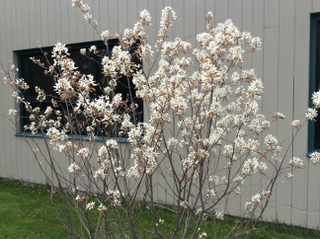 Service berry tree in bloom in 2020, one year after planting
Continuing that celebration, about 70 Williamstown League members, all dressed in white, marched in last year’s 4th of July Parade. “We got shortchanged because we couldn’t march this year in honor of the League’s 100th anniversary, but we will celebrate the 101st in style next year,” Skinner proclaimed. “We want to get young people carrying signs saying ‘I’m going to vote in 2024.'”
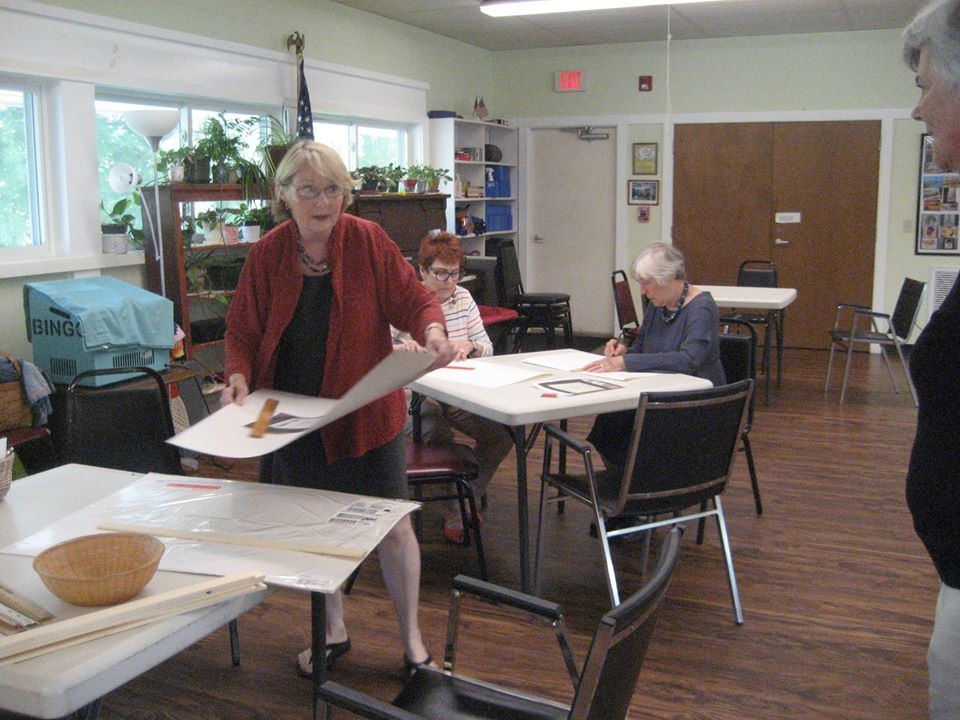 League members Barbara Winslow, Bette Craig, and Carrie Waara making posters for the 2019 4th of July parade.
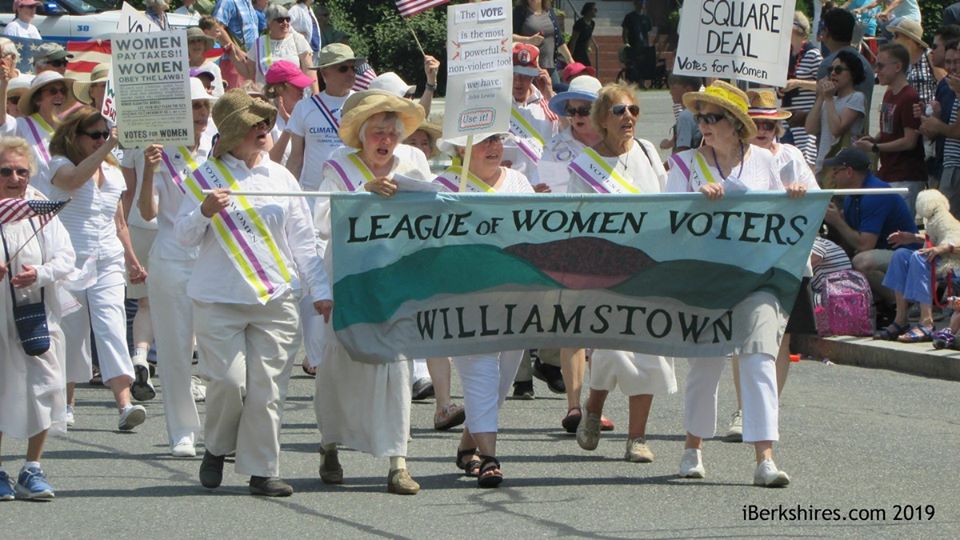 iBerkshires photo of Williamstown LWV members marching in the 2019 4th of July Parade.
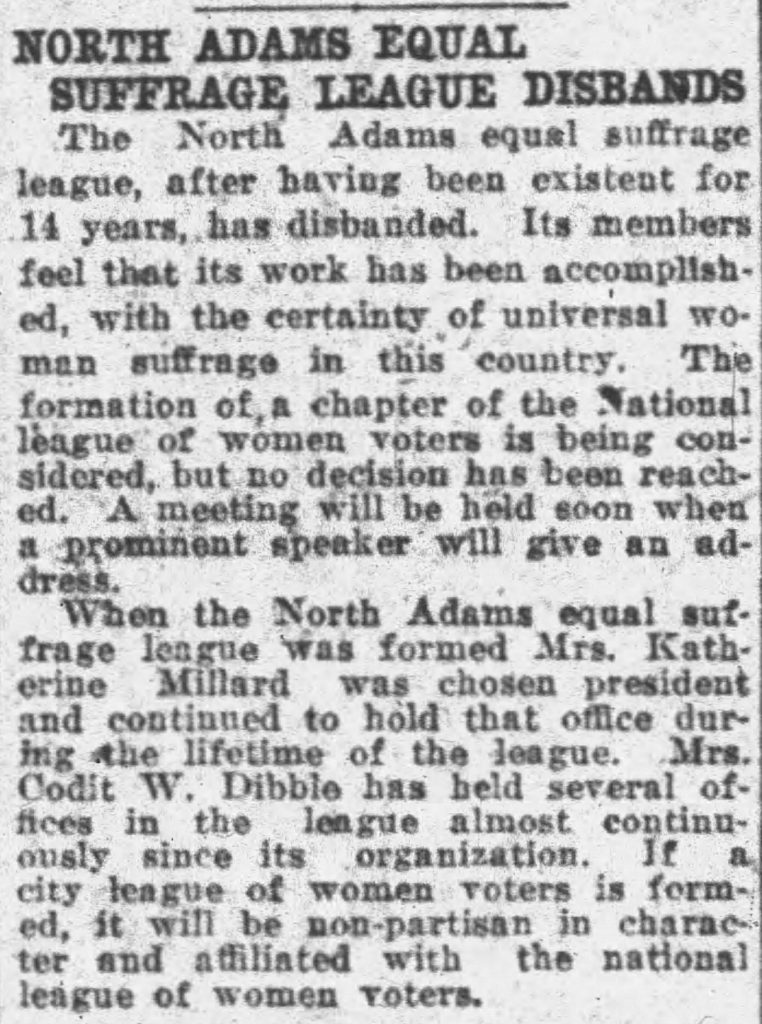
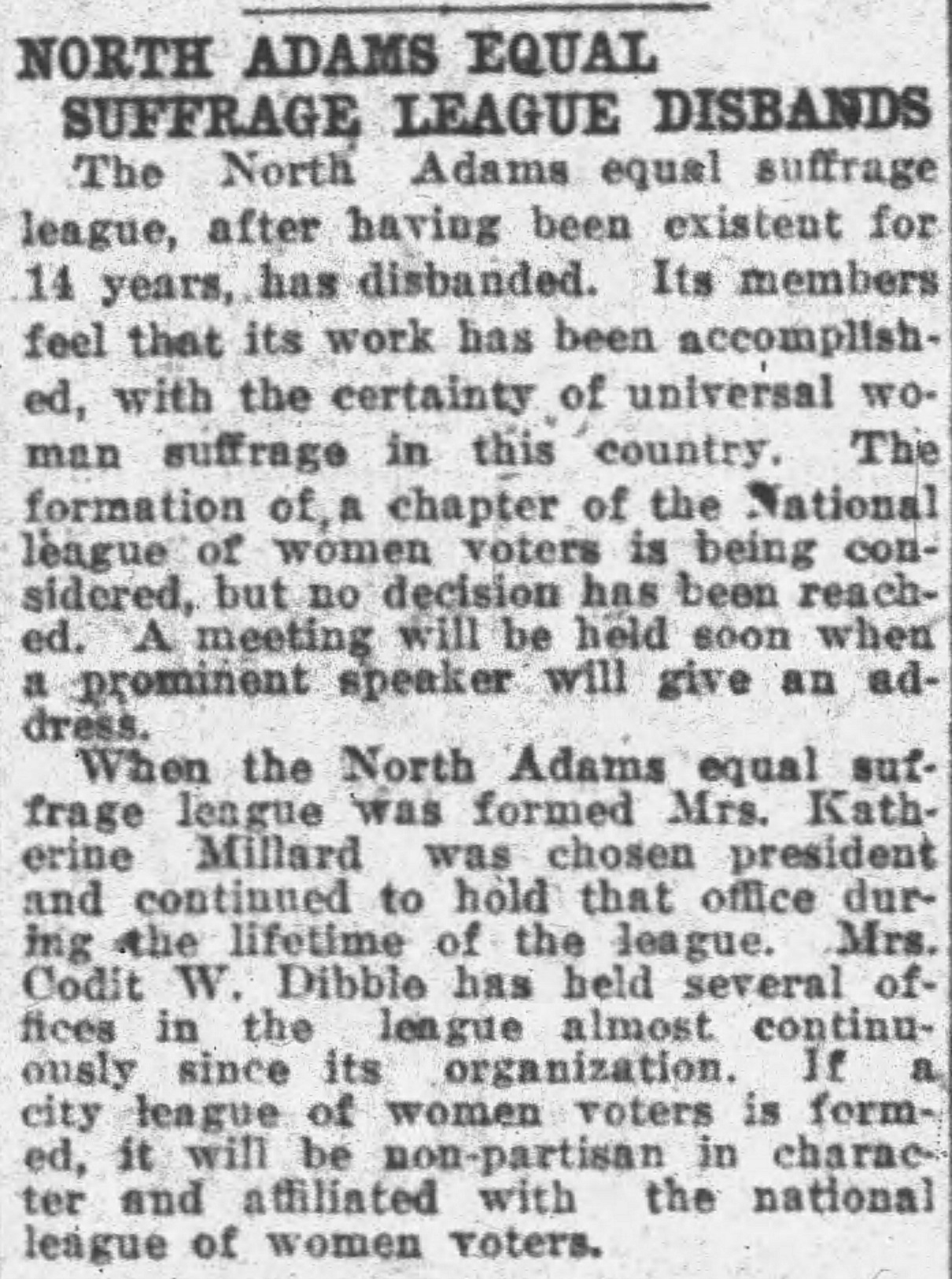
Thanks to Gene and Justyna Carlson of the North Adams Museum of History & Science for providing this program from the 1913-1914 North Adams Equal Suffrage League. The quotations are particularly interesting.

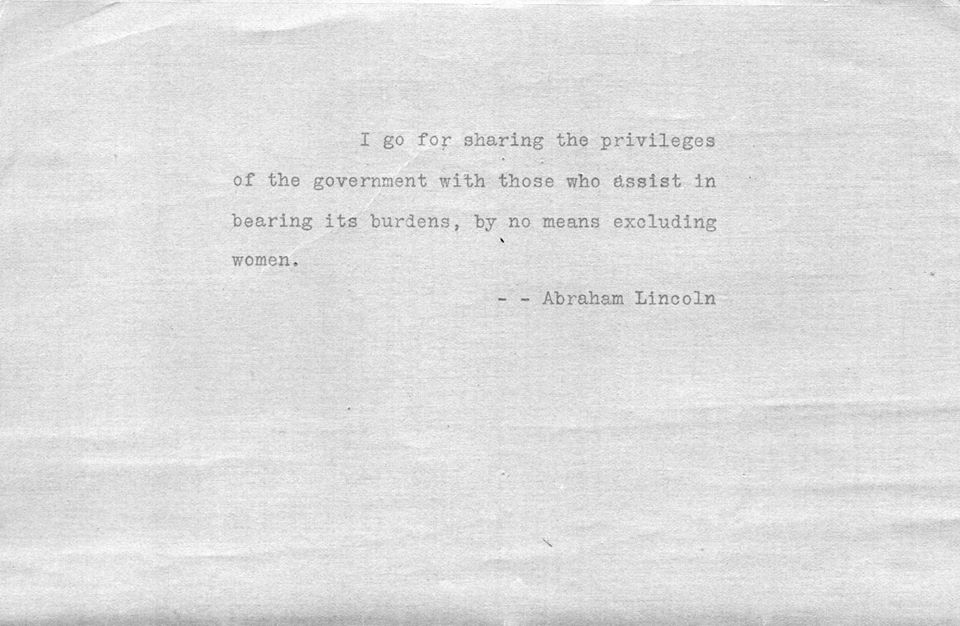
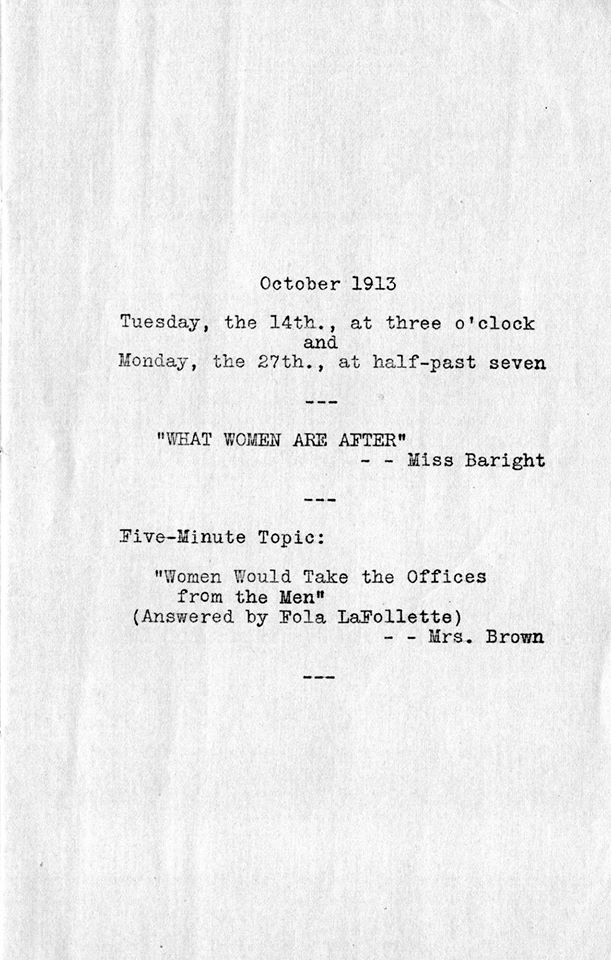
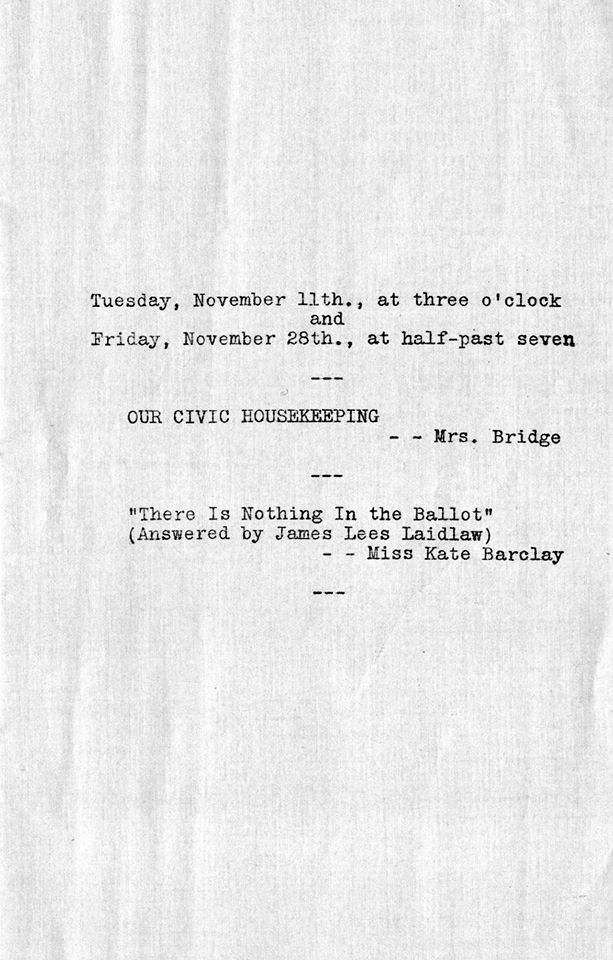
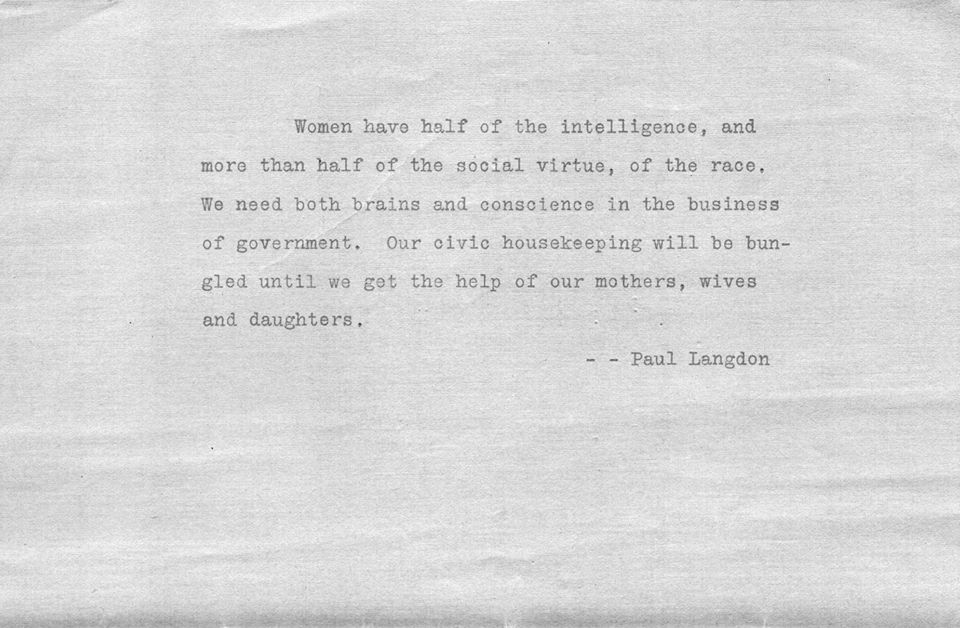
And thanks to Anne Crider for the following information on the League: “The North Adams Equal Suffrage League existed for 14 years before it disbanded in August of 1920. It was formed by Katherine Millard, who was chosen as president and held the position for the entire time the League existed. Another active woman in the League was Mrs. Condit W. Dibble.”