The tour includes 20 buildings or sites of buildings that were in place in Williamstown in 1776. It is part of a larger tour of more than 70 historic sites that can also be found on the Williamstown Historical Museum website. The tour was designed in 2026 by the Williamstown Historical Commission. This tour is designed as a “windshield tour” beginning in the central historic district. Some of the buildings on the Williams College campus may be entered, but note that most of the houses are private residences. Please do not enter those properties.
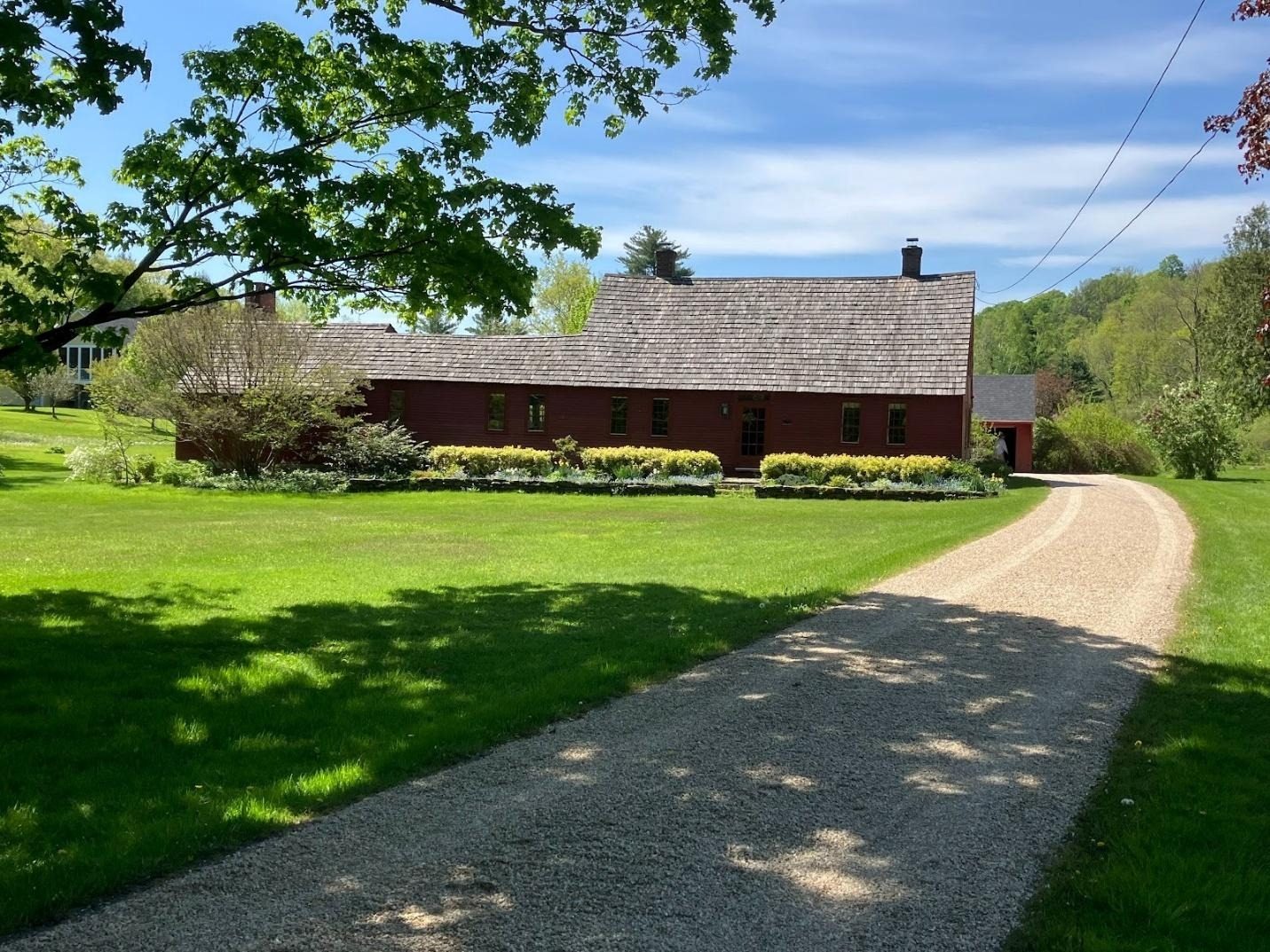
1. 1385 Main Street. Red saltbox. 1767. Two stories in the front, one story in the rear, with a long, sloping roof in the rear, a traditional New England style, called a “saltbox” because it resembled a lidded wooden box used to store salt. Built on what was then the corner of Main Street and the original line of the main westward highway (Bee Hill Road), it originally had four rooms, two chimneys, a central hallway, and a substantial second floor for sleeping. The house served at various times as a tavern and as a school. It was enlarged in 1830 and 1971. Today, it is a private residence.
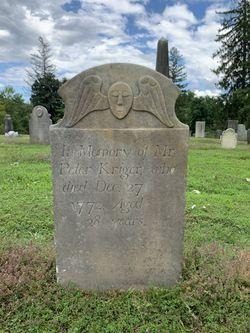
2. 1205 Main Street. Westlawn Cemetery. 1766. Laid out on land purchased from John Newbre, for 75 years it remained the only cemetery in the northern section of town. Newbre’s daughter Anne, who died in 1762, was reburied on the property. One of the oldest stones is Peter Kriger’s from 1772 (pictured here) – he and his brothers ran one of the first mills in town. Several early settlers, including Benjamin Simonds (1726-1807) and Thomson Skinner (1752-1809), both leading town citizens during and just after the Revolution, are buried here.
More:
The large Danforth obelisk/monument was erected in the late 19th century on land donated by the family of Keyes Danforth. Also buried in Westlawn are Robert C. Sprague (1900-91), the founder of Sprague Electric Company, along with his brother, Julian, and his parents.
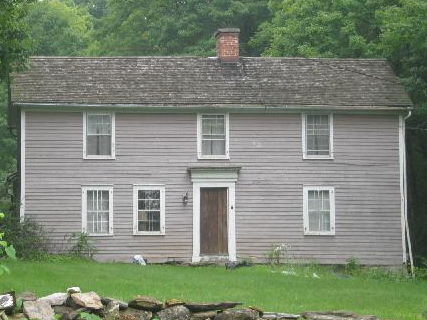
3. 1192 Main Street. Jacob Meack House. Circa 1768. The front part of this house is built around an original “regulation house.” (A “regulation” of the colonial legislature required that to prove their claim the first proprietors were required to build a house at least 18’ x 15’, with walls at least 7’ high. A replica of a regulation house, constructed in 1953, sits now in Field Park.) The house, on the banks of Hemlock Brook, was built for Dr. Jacob Meack, the first physician in town, and it was for him that early settlers named this part of Hemlock Brook “Doctor’s Brook.” The house is a private residence.
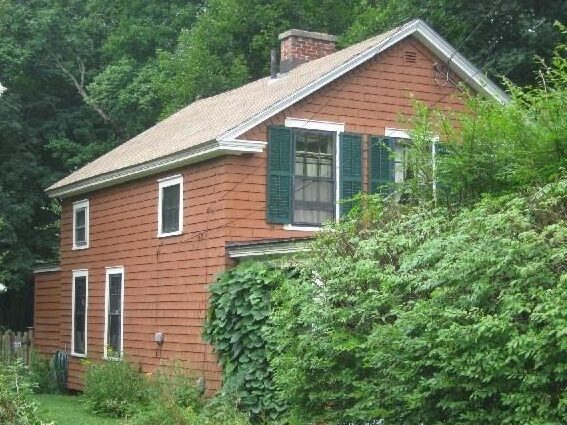
4. 1183 Main Street. Site of Seth Hudson’s 1752 House. On this site stood the house of one of the first settlers, Seth Hudson. A regulation house, built about 1752, it was located on the banks of the brook, and in what was then the center of the settlement. Here the Proprietors chose officers and committees, imposed taxes upon themselves, planned the division of meadows and uplands, and made provision for highways. The house was later moved down Hemlock Brook to what is now Bulkley St. The present house at 1183 Main Street, a private residence (pictured here), was built in the 1830s.
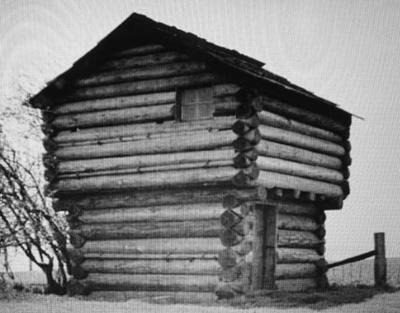
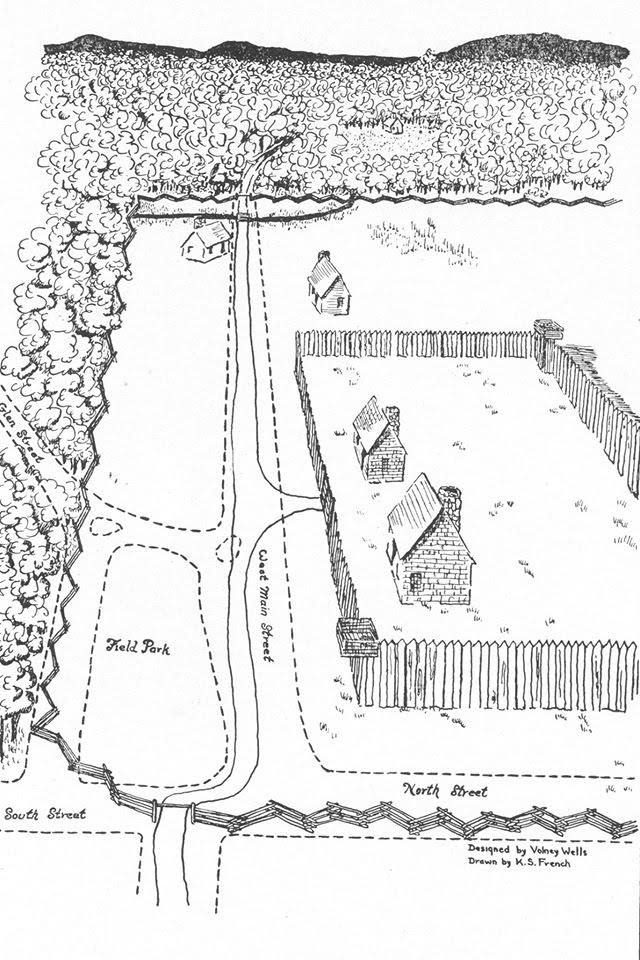
5. 1090 Main Street. Site of the 1756 West Hoosuck Blockhouse. Designed as protection from French soldiers and their native allies during the French and Indian War, it was set back from both Main St. and North St. The men in the 40’ x 40’ blockhouse engaged in a skirmish in July 1756 when three soldiers left the blockhouse to look for their cows, which had wandered down Hemlock Brook toward the Hoosic River. A group of some forty-to-fifty Abenaki, spotted in the area in recent weeks, surprised the men and quickly killed them and their cows. A few Abenaki crept up to the blockhouse and reportedly fired about two hundred rounds before withdrawing.
More:
The blockhouse also served briefly as the meeting place for the proprietors of the town until the construction of a schoolhouse on the northeast corner of North and Main streets in 1763, when the blockhouse was dismantled and its lumber re-purposed. In the late 19th century the Kappa Alpha fraternity house stood on the corner of North St. and Main St., and in 1892 Harley Proctor built on the site a grand summer house, which later became the new home of KA. In 1968 that building burned, and in 1974 was replaced by a newly-constructed Williams Inn (formerly on the Williams College campus, in what is now Dodd House). The Inn was demolished in 2019 when the Williams Inn moved to the foot of Spring St. Construction of a new Williams College Museum of Art on the site began in 2025 and is scheduled to be completed in 2027.
Hoosic or Hoosuck? West Hoosuck was the name of the town before it became Williamstown in 1765. The river is the Hoosic. The mountains east of North Adams are part of the Hoosac Range. The town near Troy is called Hoosick Falls.
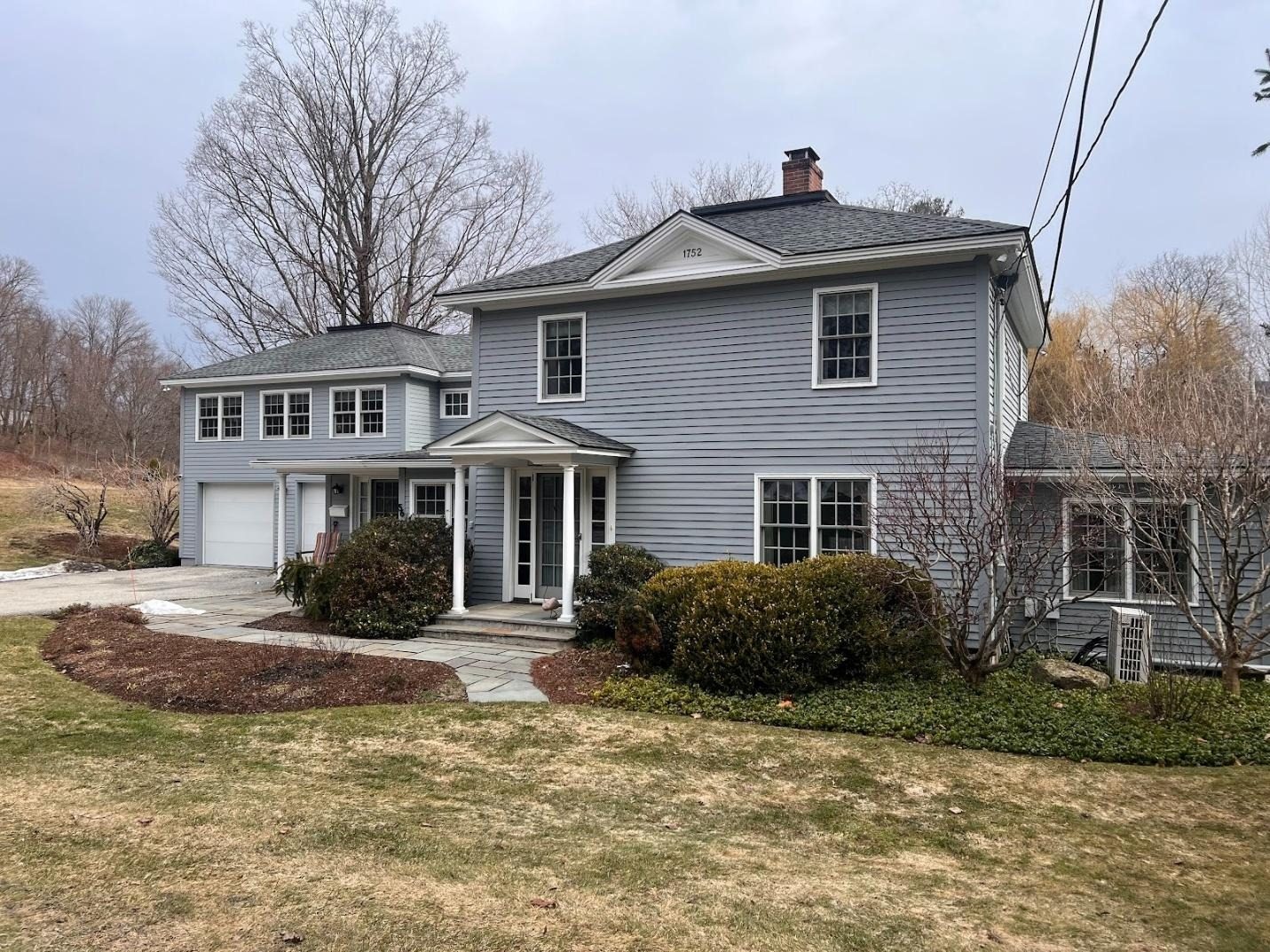
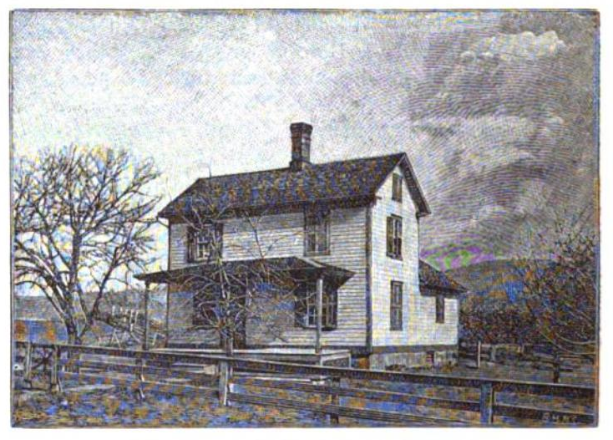
6. 56 Bulkley Street. Seth Hudson House. 1752. Now much enlarged, the house was built around the one-room Seth Hudson regulation house that once stood on Main St. (Some of the original interior timbers are still exposed.) In the early 19th century it was moved down Hemlock Brook to its present location, where it served as a wheelwright’s shop. Over time the one-story house became two stories, and additions were made. It is now a private residence.
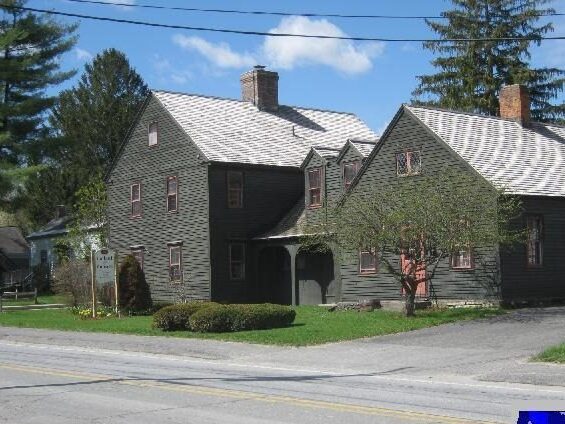
7. 95 Water Street. Regulation house. 1767. The lower northern part was built as a “regulation house,” and later expanded into a salt box. Over the next two hundred years, while it served as a private residence, additions and alterations were made to the structure. In 1976 those additions were removed, and the northern part was restored to its original appearance. The two-story southern part, added at that time, was designed to resemble a late-18th-century building. It is now a real estate office.
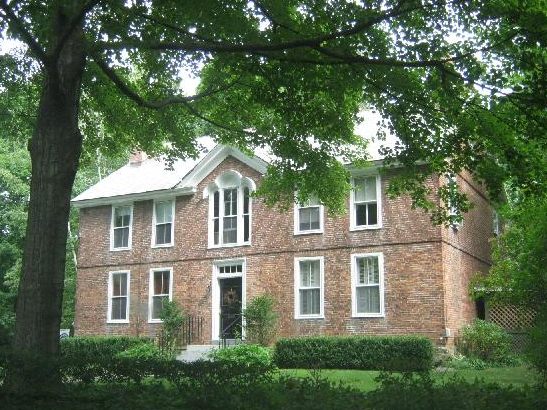
8. 674 Main Street. Judah Williams House. Circa 1771. During the Revolutionary War, Williams became very rich as a commissary to the Continental army, supplying beef cattle from his farms to Washington’s troops. Maybe as early as 1771 he built this mansion. Made of bricks from a brickworks just opened nearby on the Green River, it was the first brick house in Williamstown and the finest house in town at the time. There were many changes to the exterior in the 19th century. This is a private residence.
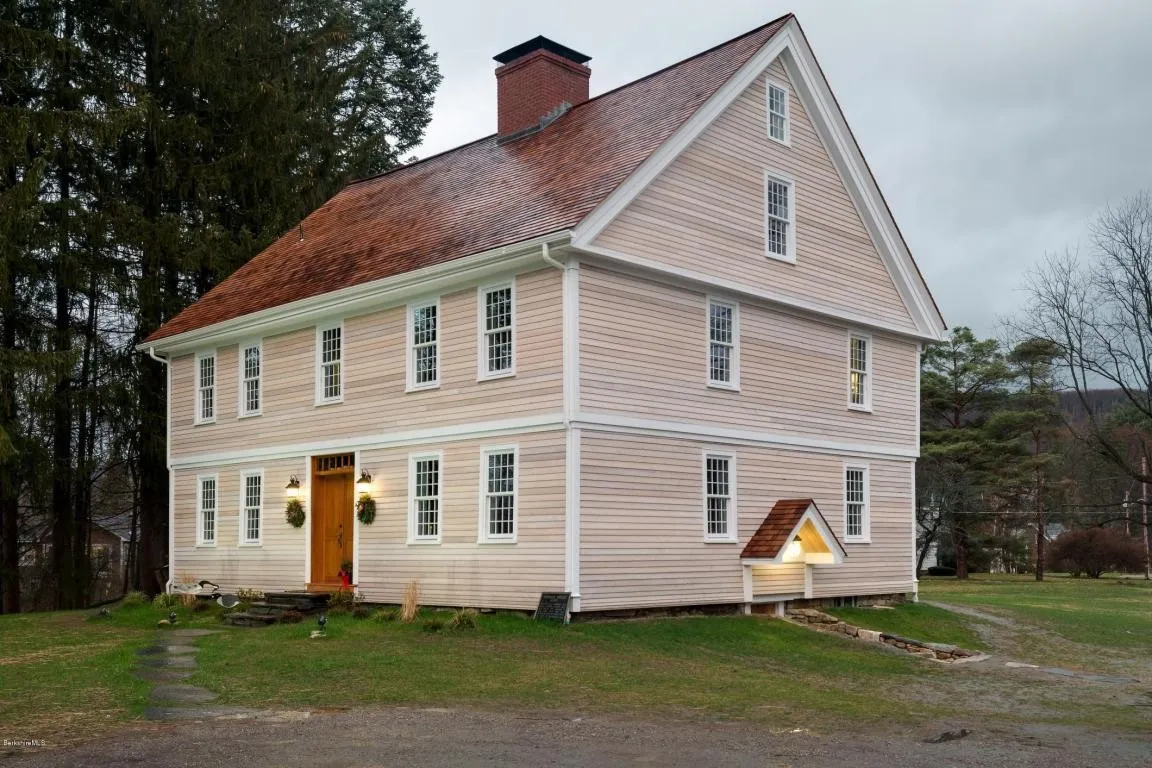
9. 530 Main Street. Smedley House and Tavern. 1772. Built by Nehemiah Smedley, one of Williamstown’s original proprietors and a militia officer, this house also operated as a tavern. On May 6, 1775, Benedict Arnold reportedly stayed here while traveling to join Ethan Allen in the capture of Fort Ticonderoga. The basement’s large oven was used to bake bread for Captain Smedley and his military company after the Battle of Bennington in 1777. The house was restored in 2016, and is now a private residence.
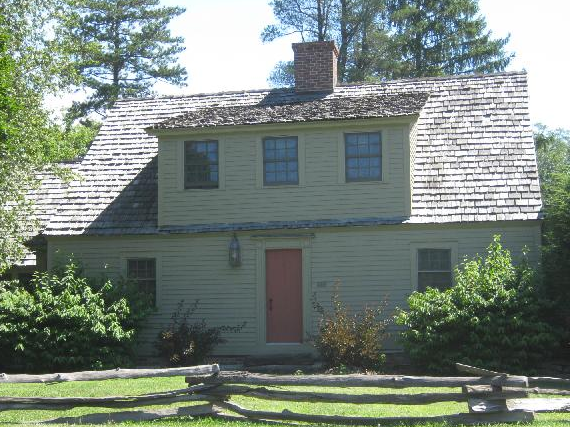
10. 668 Simonds Road. Regulation house, 1773. Built as a regulation house by Robert Hawkins, who served as one of the deputies from Williamstown at the 1774 County Congress in Stockbridge, called to protest one of the so-called “Intolerable Acts” imposed on the colony, it was bought in 1799 by 73-year-old Benjamin Simonds , who spent his last years there. It was later one of the many properties owned by Ephraim Seelye. Over the years the house was much expanded and remodeled. From 1925 until 1941 it served as the Cozy Inn Tea Room. Since then it has been a private residence.
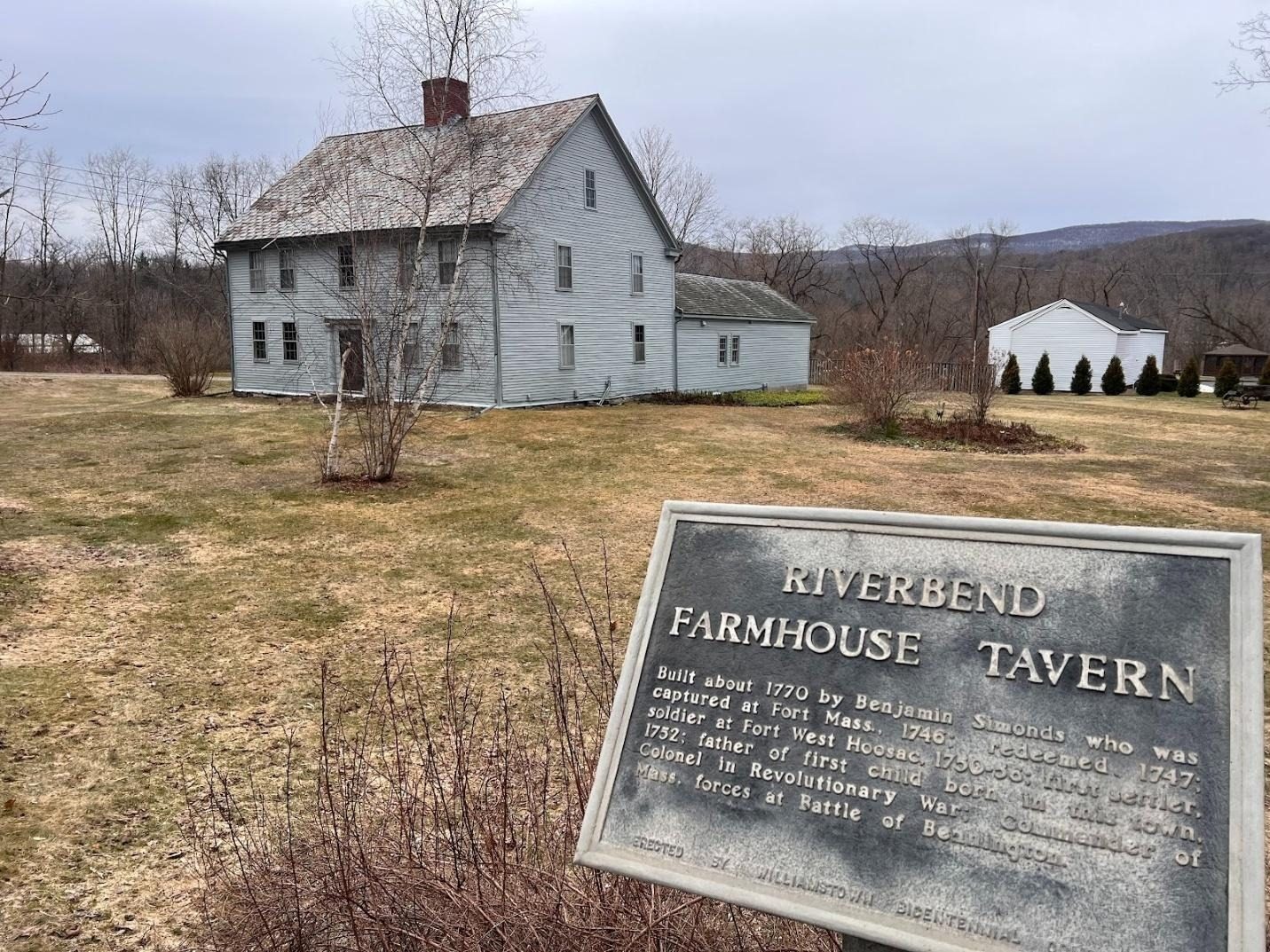
11. 643 Simonds Road. Simonds Farmhouse and Tavern. 1770. Colonel Benjamin Simonds built this house as both a home and tavern beside the north trail from the village. One of Williamstown’s earliest and wealthiest citizens, Simonds led his regiment at the Battle of Bennington in 1777. In the early 1770s he owned two enslaved African-Americans, freeing them both by 1783. Extensively restored, River Bend Farm (as it has been known since the mid-19th century) long served as a working farm and then in the late- 20th century as a bed-and-breakfast. The building is listed on the National Register of Historic Places. It is now a private residence.
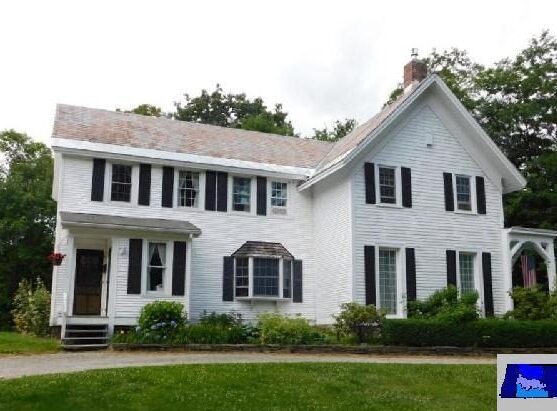
12. 78 Cold Spring Road. First Simonds Tavern. Circa 1760. This house has a complicated history. It used to be located a little further north, on the site now occupied by the public library. The original part of the house was owned by Benjamin Simonds, who ran it as an inn and tavern on The Square before he built a new home north of the Hoosic River. In the 19th century it was long owned by the Sabin family, and under Dr. Henry Sabin, an abolitionist, it served as a site on the Underground Railroad. It was moved to its present location in 1888 when his son N. H. Sabin wanted to build a big new house. It is now a two-family house, much enlarged and modified over the last 250 years. This is a private residence.
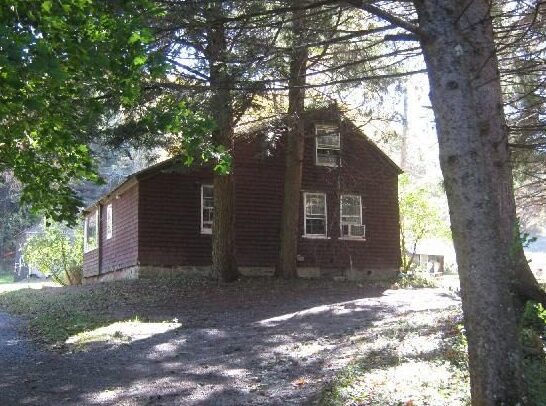
13. 734 Cold Spring Road. Bratcher House. Late 1760s. Built as a two-room house, later enlarged to four rooms with two bedrooms in an attic, and a saltbox roof. Long part of the “Noble Farm,” it has been owned since 1917 by the Bratcher Family. Henry Bratcher (1926-2011) spent thirty years as a mailman and six years as a town selectman. This is a private residence.
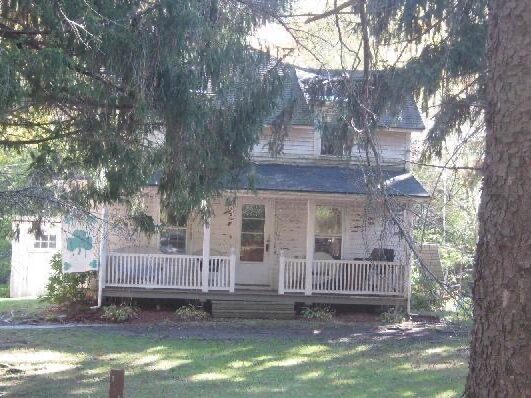
14. 988 Cold Spring Road. Bratcher Homestead. 1750s. This house was built a little earlier than the one at 734 Cold Spring Rd. The front porch is not original. Behind the house is an old barn on which you can still see a faded sign reading “Henry E. Bratcher, Contractor & Builder.” He was the grandfather of the present owner, a master carpenter who in 1921 bought a contracting business. He died in the house in 1975. This is a private residence.
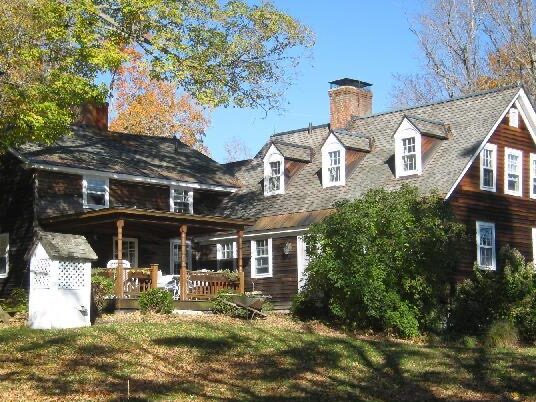
15. 235 Oblong Road. William Torrey House. 1770. The oldest part of this house (to the left in the photo) was built by William Torrey, one of the first settlers on Oblong Rd. The original house was enlarged over time. The property, given the name Thorvale Farm in the early 20th century, was later owned by the novelist Sinclair Lewis, who converted outbuildings into living quarters and built a house for himself uphill. It remains a private residence.
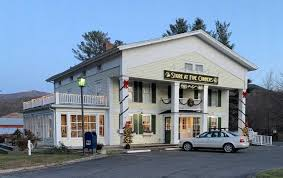
16. 4 New Ashford Road. The Store at Five Corners. 1770. Built as a tavern by Samuel Sloan on land purchased from Isaac Stratton. It was later home of the first South Williamstown post office (1827) and served as a general store. Under ownership of John Jordan (1833-65), the second floor and Greek Revival portico were added. In the late 19th century the building served as a hotel. For most of the 20th century (1905-78) it was owned and operated by the Steele family, and known as “Steele’s Store.” It was purchased in 1978 by William Vanderbilt, former Rhode Island governor who had a summer house on Oblong Road, and renamed “The Store at Five Corners.”
More:
The Store remained in business under various owners until 2020, when it closed, but re-opened in 2022 when it was bought by the nonprofit Store at Five Corners Stewardship Association.
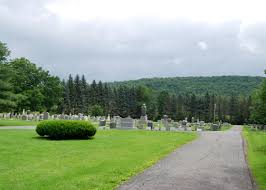
17. 30 New Ashford Road. Southlawn Cemetery. 1769. Behind the Williamstown Historical Museum, the cemetery was laid out on land given by South Williamstown’s first settler, Isaac Stratton. The first burial was in 1777 for Reuben Burbank, a three-year-old son of the second family to settle in the neighborhood. Among those buried here is Belle Smith (1864-1949), who taught for many years at the South Central School. Others include Strattons and Youngs and other early settlers and Revolutionary War veterans.
More:
Benjamin F. Mills (who founded the Mills Institute), members of multi-generational farming families, and fifteen members of the Steele family (who ran Steele’s Store) are also buried here.
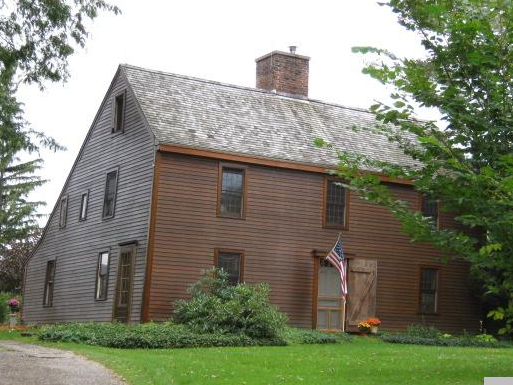
18. 83 Sloan Road. The Clark-Young House. 1765. A saltbox built by Capt. Samuel Clark, who later fought at the 1777 Battle of Bennington. Still later (1790) it was the home of William Young, who served in the Massachusetts General Court between 1792 and 1808. Five fireplaces open off a central chimney. On the second floor a room with a barrel-vaulted ceiling was the meeting place for a South Williamstown Masonic Lodge. A now-detached 1861 barn has original unmilled joists. The house has been fully restored, and preserves many of its colonial features. It has always been a private residence.
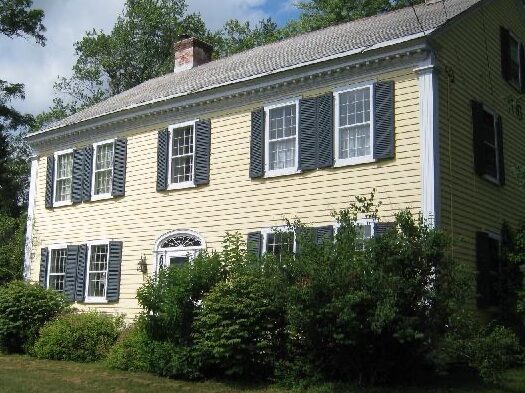
19. 905 Hancock Road. Young House. Circa 1770. Built by Moses Young, with decorative details (elliptical door windows, fluted corner pilasters, and medallion cornice) from about 1810. Some original wide floorboards survive. Additions to the rear of the house were made over the years. It was owned by Young and his descendants until 1941. It remains a private residence.
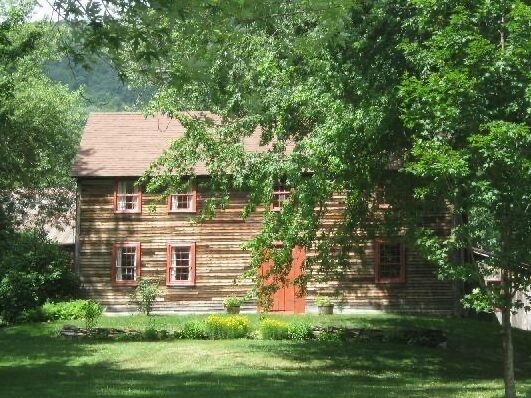
20. 1501 Hancock Road. Comstock House. 1773. The 18’x38’ front part of this saltbox, the fourth house from the Hancock town line, facing Hancock Road, is the oldest part. It was built by Ishmael Comstock (1750-1820), and owned by his descendants for several generations. Over time two rooms and a garage were added on to the back of the house. The unpainted narrow clapboards are unusual. In the late 20th century it was owned by antique dealers who restored the house; discovered a large central chimney, with a marble mantel, a bake oven, crane, and kettle; and exposed the cherry beams in the 7’ ceiling. This is a private residence.
More:
The house served as the residence for a large farm which was subdivided several times in the 20th century.
Comstock’s brother, Thomas, bought land nearby in the 1790s, and his family farmed it until 1932. Ishmael Comstock’s tombstone, which formerly stood in a family graveyard, at one time formed part of a patio wall behind the house.